Scam: Nota de entrega importante: (1) pacote está esperando por você

At a glance
- Verdict
- ScamGet the recipient to click 'Schedule the delivery now' and pay a fake customs fee for a non-existent package.
- Subject line
- not captured
- Claimed sender
- FedEx™
questionprov552800485326803432.com - Impersonates
- FedEx — FedEx delivery notice about a package held at a distribution centre for a pending customs fee
- Received
- not recorded · Published
The email is reproduced only as a screenshot; no header block was captured, so the subject and receipt date are unavailable. Sender details come from the Red Flags narrative: display name FedEx, a truncated local part containing the recipient's name, sent via and mailed-by peterlaw.ca.
Evidence: the message as received plus passive registry lookups; links and attachments are not opened. How we analyse a scam email.
ENTREGA DO PACOTE SUSPENSO! Status: Parado no centro de distribuição (taxa alfandegária pendente)
Complete Email
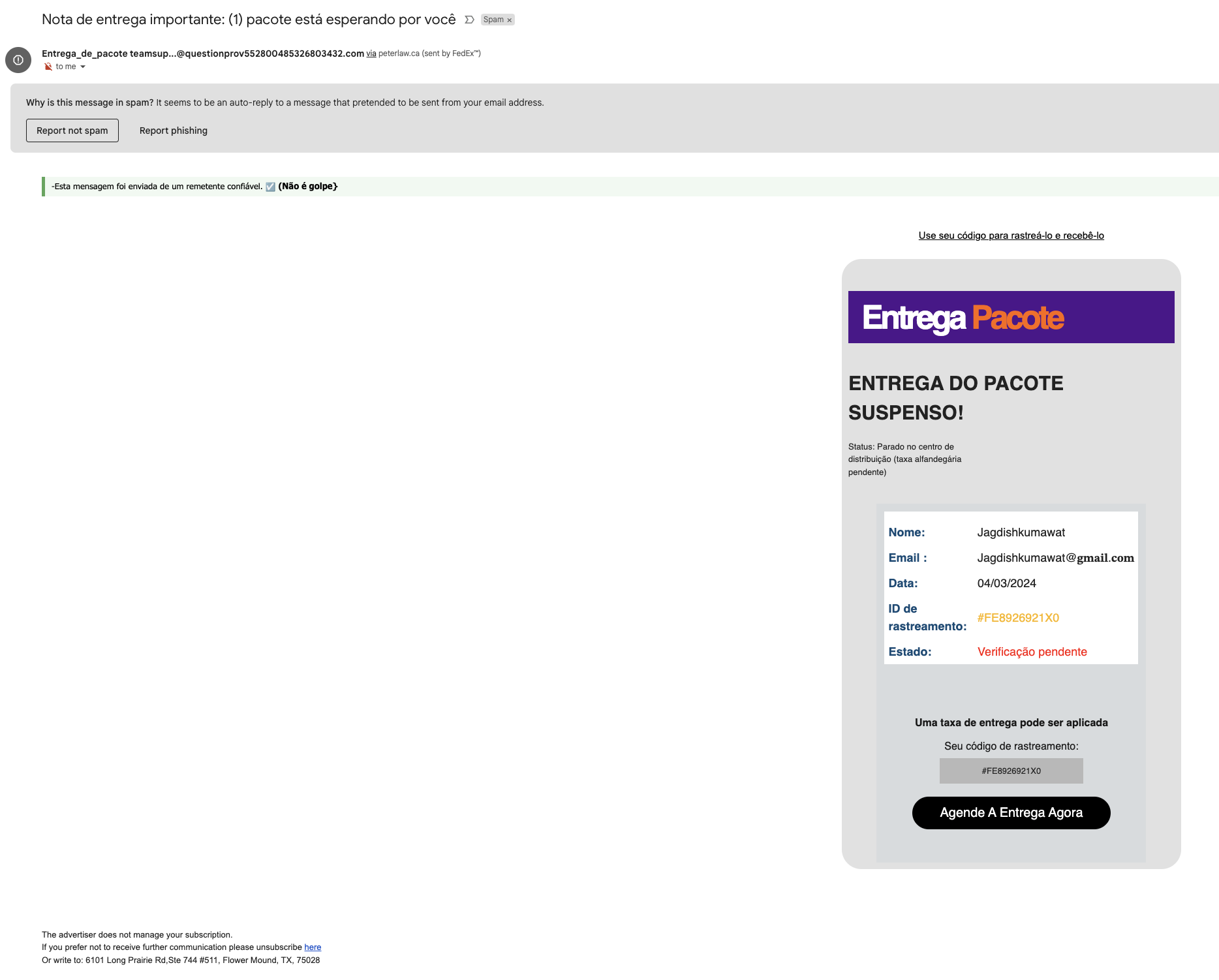
Red Flags
This email contains several red flags that suggest it might be a phishing attempt or scam:
-
Complex Sender Email Address: The sender's email address (
teamsupport-Jagdishkumawat-828...@questionprov552800485326803432.com) is overly complex and does not resemble a typical email format used by legitimate companies. Legitimate businesses use straightforward email addresses that are easy to read and often match their company name. -
Use of "via" in the From Address: The email is sent "via peterlaw.ca" but claims to be from FedEx™. This mismatch can indicate that the email is being sent through a third party's mail server, which is uncommon for official communications from large organizations like FedEx.
-
Mismatched Information: The email claims to be sent by FedEx™, but the "mailed-by" domain is "peterlaw.ca", which does not seem to be related to FedEx. This inconsistency is a common trait in phishing emails.
-
Suspicious Phrasing: The body starts with "Esta mensagem foi enviada de um remetente confiável. ☑️ (Não é golpe}" which translates to "This message was sent from a trusted sender. ☑️ (Not a scam}". Legitimate emails from reputable companies rarely, if ever, need to reassure the recipient that they are not a scam.
-
Vague and Urgent Request: The email mentions a suspended package delivery due to a pending customs fee and prompts immediate action. Phishers often create a sense of urgency to trick recipients into acting hastily.
-
Use of Personal Information: The inclusion of a name and tracking ID attempts to add legitimacy; however, this can be a tactic to make the scam seem more believable.
-
Request for Action: The email asks the recipient to "Agende A Entrega Agora" (Schedule The Delivery Now), likely leading to a phishing website designed to steal personal and financial information.
-
Unsubscribe Option: The presence of an unsubscribe link is not inherently suspicious, but in the context of a scam email, it can be a tactic to confirm active email addresses or mislead recipients into thinking the communication is legitimate.
Given these red flags, it is advisable not to interact with the email, especially not to click on any links, provide any personal information, or follow any instructions contained within. Instead, verify any package delivery issues directly through the official website or customer service contacts of the shipping company.
